POSTED BY:
COMMENTS:
0
POST DATE:
Common Lockout Tagout Mistakes
When a Massachusetts manufacturing plant failed to properly lock out a conveyor system, a 34-year-old maintenance worker suffered permanent hand injuries. The investigation revealed a shocking truth: the company had written LOTO procedures, but employees were making the same dangerous mistakes that occur in thousands of workplaces every day.
Lockout Tagout consistently ranks in OSHA's top 10 most violated standards year after year. But what separates compliant facilities from those facing citations—or worse, tragedies? It often comes down to avoiding these seven common but deadly mistakes.
1. The "Tagout-Only" Trap
The Mistake: Using only tags without physical locks, treating LOTO as a warning system rather than a physical barrier.
The Risk: Tags can be removed, fall off, or be ignored. Without a physical lock, equipment can be accidentally—or intentionally—re-energized.
The Fix: Always use standardized locks with tags. Implement a "one lock, one person, one key" policy where every worker applies their own lock.
2. Incomplete Energy Isolation
The Mistake: Isolating only the primary energy source while missing secondary sources like:
-
Capacitors storing electrical energy
-
Pneumatic lines under pressure
-
Raised components with gravitational energy
-
Thermal energy in heated systems
The Risk: Workers encounter "surprise" energy releases that can cause shocks, burns, or crushing injuries.
The Fix: Conduct comprehensive energy source audits for each piece of equipment. Create machine-specific procedures that document EVERY energy source.
3. The Verification Skip
The Mistake: Assuming equipment is de-energized after applying locks, without performing the critical verification step.
The Risk: Faulty isolation devices or missed energy sources can leave equipment live. Workers discover the hard way that locks alone don't guarantee zero energy.
The Fix: Mandate that workers test controls and use voltage testers to verify de-energization. Make "Test Before You Touch" non-negotiable.
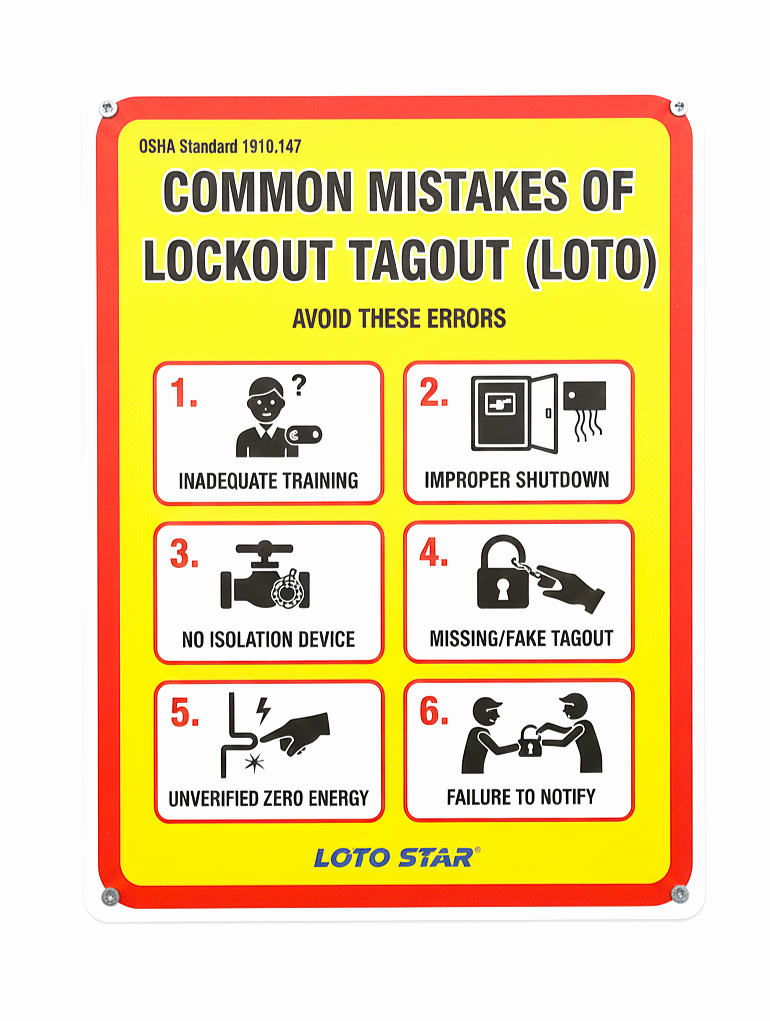
4. Inadequate Employee Training
The Mistake: Providing generic LOTO training that doesn't address:
-
Specific equipment procedures
-
Recognition of hazardous energy sources
-
Their specific responsibilities (for both authorized and affected employees)
The Risk: Even well-intentioned workers make dangerous errors when they don't understand the specific hazards or procedures.
The Fix: Implement role-specific training with hands-on components. Authorized employees need detailed technical training, while affected employees need to recognize and respect LOTO protection.
5. The Group LOTO Shortcut
The Mistake: Using inadequate procedures for group lockout situations, such as:
-
Using a single lock for multiple workers
-
Poor communication between team members
-
Unclear responsibility for verification
The Risk: The classic "I thought you applied your lock" scenario that leaves workers unprotected.
The Fix: Implement a group lockout box procedure where each worker applies their personal lock to a group lockbox, and the supervisor verifies all isolation points.
6. Procedure Amnesia
The Mistake: Creating LOTO procedures once, then letting them collect dust without:
-
Annual reviews and updates
-
Revision after equipment changes
-
Employee retraining on updated procedures
The Risk: Procedures become outdated and useless, leading workers to develop unsafe "shortcuts."
The Fix: Schedule mandatory annual procedure reviews. Implement a management of change process that triggers LOTO updates whenever equipment is modified.
7. The Restart Rush
The Mistake: Rushing to remove locks and restore power without:
-
Ensuring all tools are clear
-
Verifying all workers are accounted for
-
Confirming equipment is reassembled properly
The Risk: Workers still in the danger zone face unexpected startup, or improperly reassembled equipment fails catastrophically.
The Fix: Implement a formal restart checklist. The last lock removed should be by the person who applied the first lock, after visual verification that the area is clear.
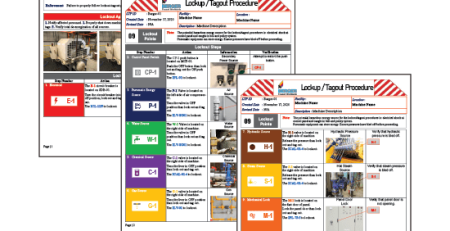
We are providing one stop lockout tagout solution for industrial sector in the country. Our Lockout Tagout Procedure can reduce the chance to commit the mistake. For any lockout tagout requirement including products, training or SOP please contact us.