POSTED BY:
COMMENTS:
0
POST DATE:
Importance of Residual Current Device (RCD) in Household Electrical Wiring System in Bangladesh
Electricity has become an indispensable part of modern life. From lighting and fans to air conditioners, refrigerators, water pumps, and kitchen appliances, every household in Bangladesh depends on electricity. However, improper electrical installations, damaged wiring, poor earthing, and faulty appliances cause hundreds of electrical accidents every year. One of the most effective ways to protect human life from electrical shock is by installing a Residual Current Device (RCD) in the household electrical distribution board. In many developed countries, installing an RCD is mandatory for residential electrical systems. Unfortunately, many homes in Bangladesh still rely only on conventional circuit breakers (MCBs), which cannot provide adequate protection against electric shock.What is a Residual Current Device (RCD)?
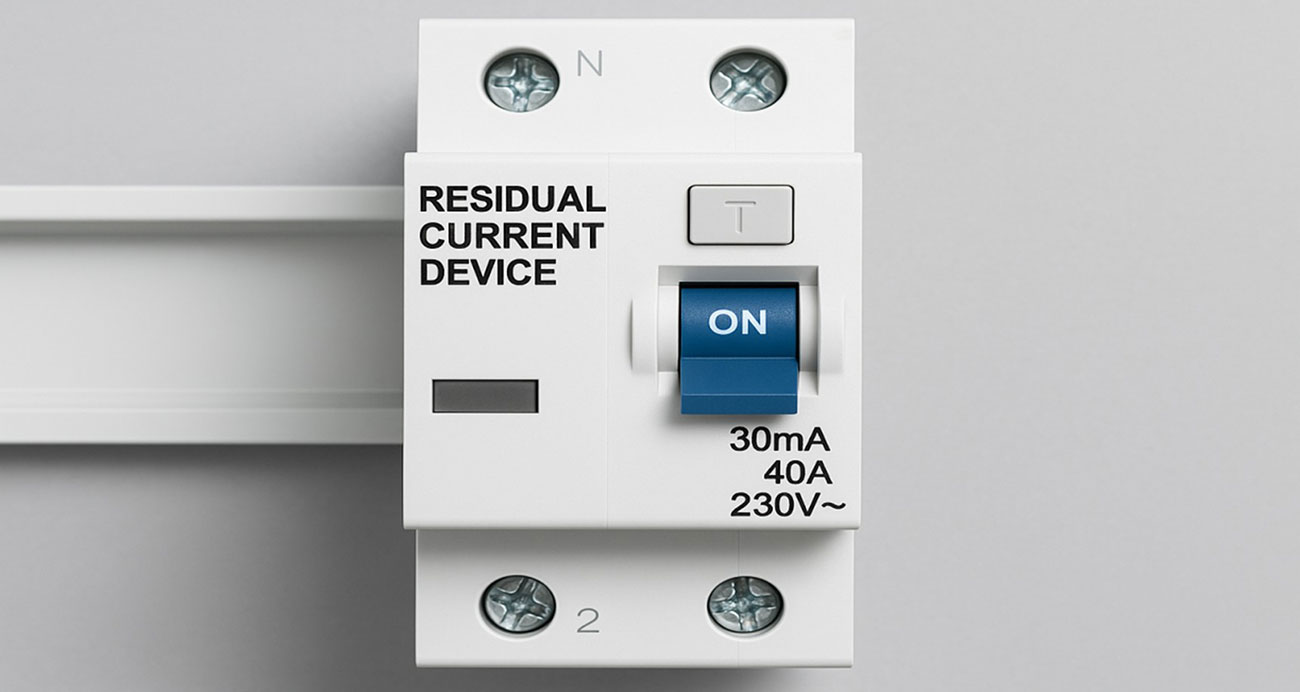
A Residual Current Device (RCD) is a safety device that continuously monitors the current flowing through the live (phase) and neutral conductors. Under normal operating conditions:- Current flowing through the phase equals the current returning through the neutral.
- The difference between the two currents is zero.
Why Bangladesh Needs RCD Protection
Bangladesh faces several electrical safety challenges:- Poor quality electrical wiring
- Aging household electrical installations
- Damaged insulation
- Moisture during the rainy season
- Water leakage inside buildings
- Improper earthing systems
- Use of counterfeit electrical accessories
- Overloaded circuits
- Unqualified electrical work
How an RCD Saves Human Life
Suppose a washing machine develops an internal insulation fault. The metal body of the washing machine becomes energized due to leakage current. When a person touches the appliance:- Current begins flowing through the person's body to earth.
- Even a current of 50–100 mA can cause ventricular fibrillation and may be fatal.
- Before the current reaches a dangerous duration, the RCD detects the leakage.
- The RCD disconnects the supply within approximately 20–40 milliseconds.
Why an MCB Cannot Protect Against Electric Shock
Many homeowners believe that a Miniature Circuit Breaker (MCB) provides complete electrical protection. This is a dangerous misconception. An MCB is designed to protect:- Electrical cables
- Wiring
- Equipment
- An overload occurs
- A short circuit occurs
- The current is far below the trip rating of a typical 16 A or 20 A MCB.
- The MCB will not trip.
- The person may continue receiving the electric shock.
Benefits of Installing an RCD
Installing an RCD provides numerous advantages:1. Protects Human Life
The primary function of an RCD is to reduce the risk of fatal electric shock.2. Prevents Electrical Fires
Leakage currents caused by damaged insulation can generate heat inside walls and ceilings. An RCD detects these leakage currents before they become serious enough to start a fire.3. Protects Children
Children are naturally curious and may accidentally touch electrical appliances or sockets. An RCD provides an additional layer of protection.4. Improves Safety in Wet Areas
Bathrooms Kitchens Laundry rooms Outdoor electrical outlets Water greatly reduces body resistance, increasing shock severity. RCD protection is especially important in these locations.5. Detects Hidden Electrical Faults
Many insulation failures are not visible. An RCD identifies earth leakage before it becomes dangerous.6. Reduces Property Damage
Electrical leakage can damage:- Appliances
- Electronic equipment
- Wiring insulation
Where Should RCDs Be Installed?
For maximum safety, RCD protection should be provided for:- Main incoming residential supply
- Socket outlet circuits
- Bathroom circuits
- Kitchen circuits
- Water heater circuits
- Washing machine circuits
- Outdoor lighting
- Garden sockets
- Water pump circuits
- Air conditioner circuits
- Electric geysers
Choosing the Right RCD
For most residential installations in Bangladesh:| Parameter | Recommended Value |
|---|---|
| Rated Voltage | 230/400 V |
| Rated Current | 40 A, 63 A, or 100 A |
| Sensitivity | 30 mA |
| Type | Type A (preferred) or Type AC for simple resistive loads |
| Poles | 2-Pole (single-phase), 4-Pole (three-phase) |
Importance of Proper Earthing
Although an RCD can operate even without an earth connection, proper earthing remains essential because it:- Provides a low-resistance fault path.
- Improves equipment safety.
- Enhances surge protection.
- Helps protective devices operate correctly.
- Reduces touch voltage during faults.
Common Misconceptions About RCDs
"My MCB already protects me."
False. MCBs protect against overloads and short circuits, not against dangerous leakage currents through the human body."Earthing alone is enough."
False. Earthing helps clear faults but cannot disconnect the supply as quickly as an RCD when a person is shocked."RCDs trip unnecessarily."
Frequent tripping usually indicates a genuine earth leakage problem that should be investigated rather than ignored.Best Practices for Homeowners
- Install a 30 mA RCD for residential circuits.
- Test the RCD monthly using the built-in TEST button.
- Replace damaged wiring immediately.
- Ensure proper earthing of the entire installation.
- Use certified electrical accessories.
- Hire qualified electricians for installation and maintenance.
- Inspect the electrical system periodically, especially in older homes.